 Customer Hub
Setup Intune Policies
This guide explains how to configure and test Conditional Access Policies in Microsoft Intune.
These policies define how access is granted or denied for users based on the compliance state of their devices.
Further information is available in the official Microsoft Conditional Access documentation →.
Misconfigured Conditional Access policies can unintentionally block users from signing in. Relution is not liable for any damages resulting from improper configuration.
Targeting All cloud apps in the Target resources with strict policies will also block users from registering their devices.
Recommendations from Relution
To ensure a smooth rollout, Relution recommends the following:
- Initially, either
- policies are run in Report-only mode to simulate their effect before enforcement
- OR the policy is applied to a limited group of test users first
- Selecting All cloud apps in the Target resources should be avoided. Selecting All cloud apps with strict policies will block users from being able to register their device. As of today, the
Microsoft Broker appcan’t be selected in the Exclude filter, which always needs to be enabled.- A good starting point is to target Office 365 →.
Example Policy Setup
Policies can be configured in Intune > Endpoint security > Conditional Access > Policies →.
The following screenshot shows an example: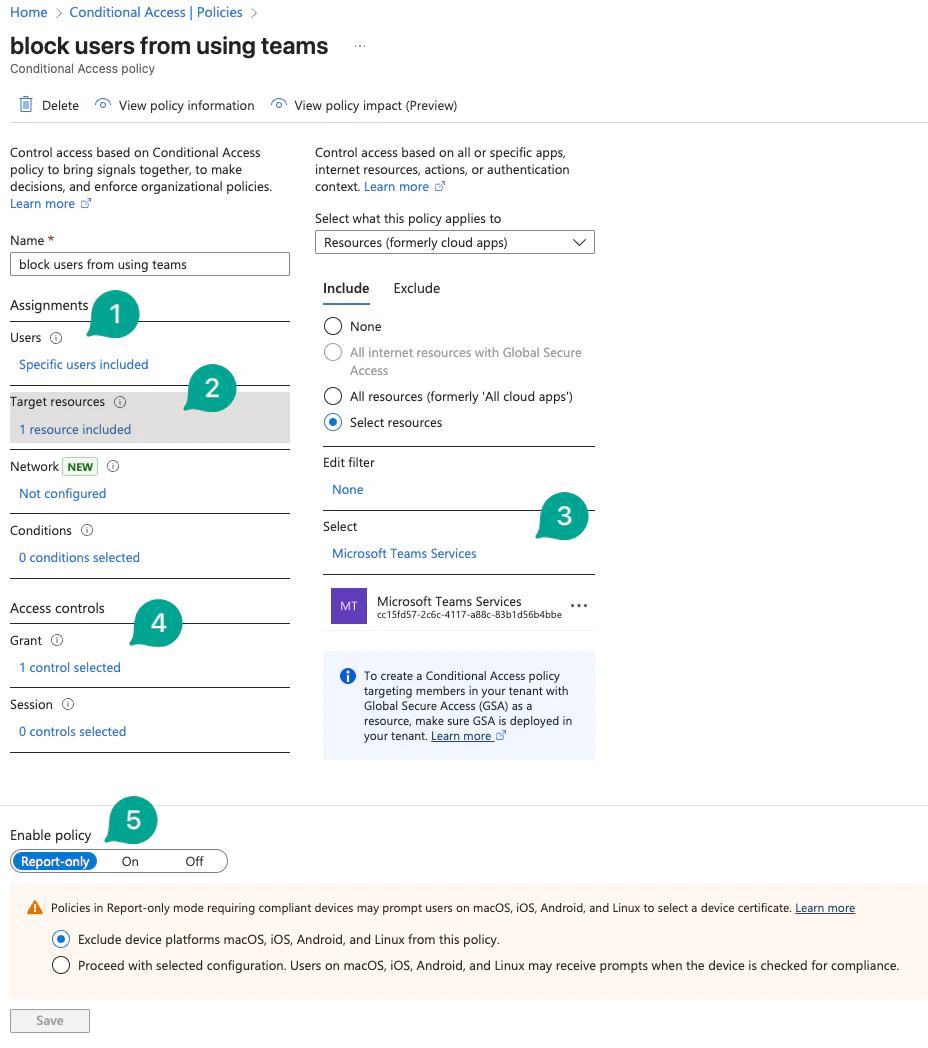
Example configuration:
- Under Users, the users the policy applies to are selected.
- Under Target resources, the policy is set to apply to selected resources.
- In this example, Microsoft Teams is selected as the resource.
- Under Grant, the access requirement is defined, e.g. only devices marked as compliant are allowed.
- The policy is set to Report-only to test it without impact.
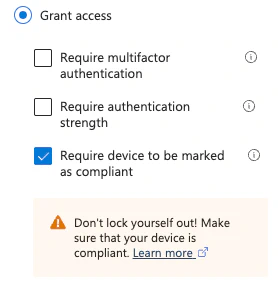
On Android Enterprise, iOS and macOS, the requirement that the device must be marked as compliant only takes effect for devices to which the Conditional Access configuration has been assigned in Relution through a policy and whose users are synchronized in Intune via the Relution compliance partner. The affected users also need an Intune license; if it is missing, the device is listed on the Conditional Access settings page with the status The intune license is missing. After the license has been assigned, the transfer is triggered again there via Sync. More information: Preconditions → and Set up platforms →.
Disable Security Defaults
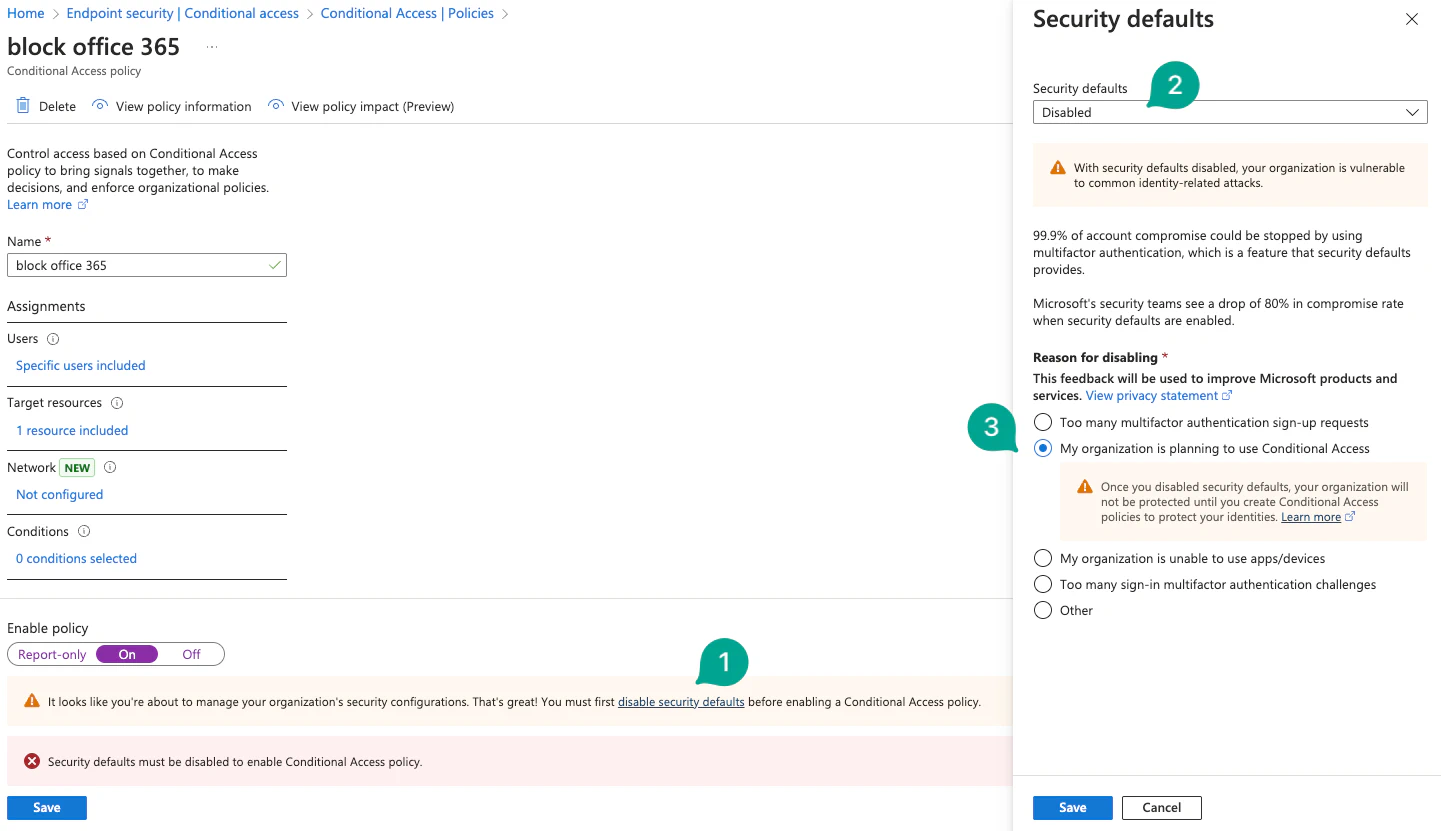
If an error about security defaults is received, they must be disabled before Conditional Access policies can be used. More information can be found in the Microsoft documentation on security defaults →.
The security defaults are disabled as follows:
- Disable security defaults is clicked.
- Disabled is selected.
- The selection is confirmed with My organization is planning to use Conditional Access.
Debugging and Policy Evaluation
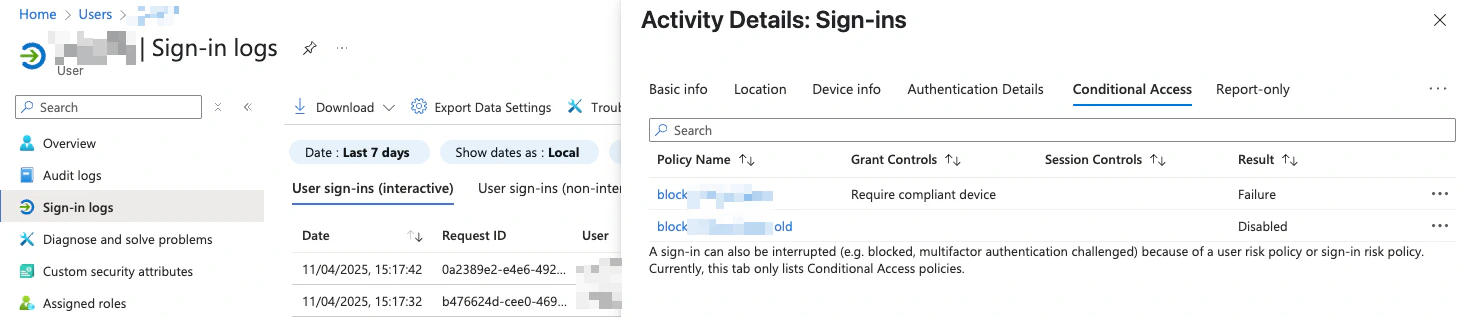
The Sign-in logs view in Entra ID or Intune shows whether and which Conditional Access policy was applied; the Conditional Access tab lists applied or evaluated policies.
Additionally, Microsoft offers a useful tool for troubleshooting and policy simulation: What If tool →. It simulates and analyzes the effect of policies before they are actually enabled.